

Fernow Trail, often called the Fernow Plantation Loop, is a short interpretive path named after Bernhard Fernow, an early pioneer in American forestry who helped shape modern forest management in the United States. The trail passes through an area once used for forestry experiments, where different tree species were planted and studied, and today it features numbered markers that correspond to information in a brochure available at the trail register.
How to get there
Directions from Saranac Lake
From Saranac Lake, take NY-3 west toward Tupper Lake. Continue through Tupper Lake, then turn onto NY-30 south. Follow NY-30 for about 10 miles to the Horseshoe Lake area, where the Fernow Trail parking pull-off will be on your right. The trailhead is located directly from this roadside parking area.
Directions from Malone
From Malone, take NY-30 south for approximately 30 miles toward Tupper Lake. Continue past Meacham Lake and follow NY-30 until you reach the Horseshoe Lake area. Look for the Fernow Trail parking pull-off on the left side of the road. The trailhead is accessed directly from this roadside parking area.
By the Numbers
Distance: Approximately 0.8 miles round trip
Elevation gain: Minimal, with only slight changes in terrain
Hiking
This easy loop is suitable for all ages and experience levels. The path winds through a forest dominated by spruce and pine, many planted in rows during early forestry experiments. Over time, natural regeneration has blended with the original plantings, creating a mixed forest that reflects both human management and natural growth. The loop design allows you to return to your starting point without retracing your steps, and a junction along the route lets you choose your direction. Interpretive stops along the trail correspond to a brochure at the trail register and explain the history and ecology of the site. Deer and other wildlife are commonly seen throughout the area.
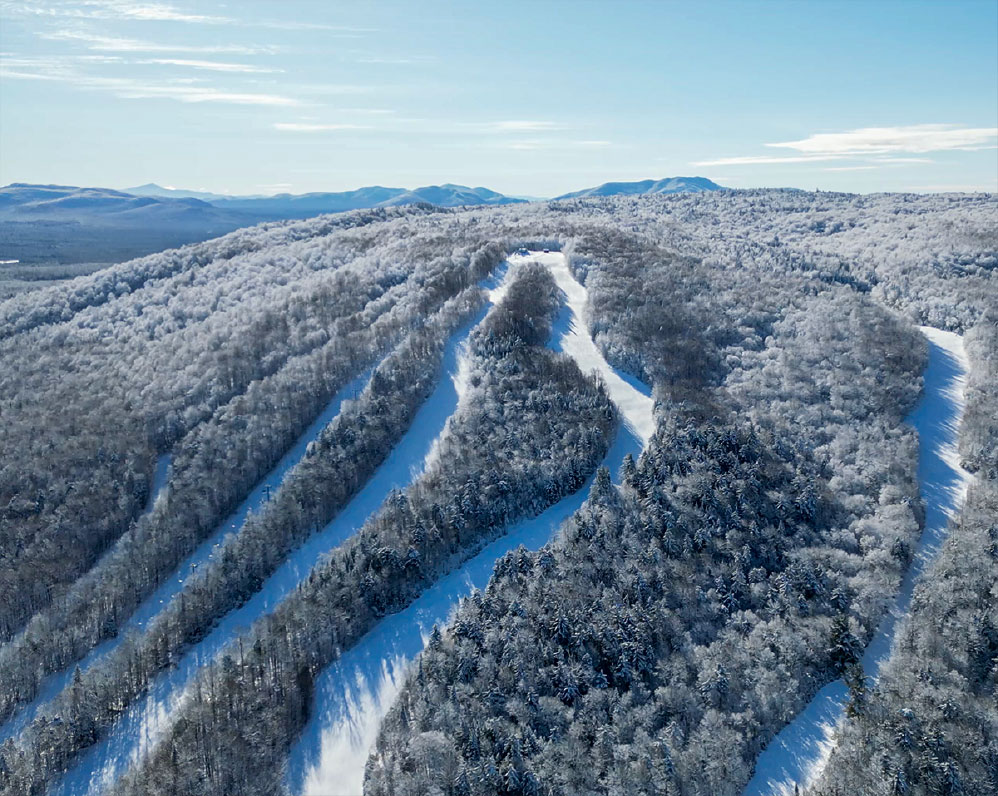
Fernow Trail in the winter
In winter, the trail becomes a gentle route for snowshoeing or cross-country skiing. The terrain is mostly flat with small rolling sections, making it suitable for beginners and families. Tree spacing allows for good visibility, though snow conditions can vary under the canopy, with better coverage often later in the season. Even on a short trip, winter visitors should be prepared for changing conditions. For the best snowshoeing conditions, wait until later in the season.